10 DM Templates That Book Calls
Actual messages that turn LinkedIn into pipeline. Refreshed for 2026.
ps - if you'd rather we run the whole system for you, messages included, book a call with the Founder of Reachium.
Don't have a Reachium account yet? Make your Reachium account here
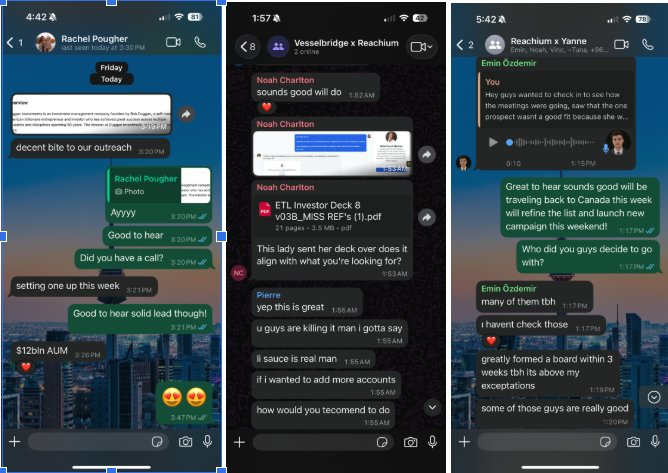
⭐️ These 10 templates booked us hundreds of qualified calls in 2025 ⭐️
The truth about LinkedIn DMs
Most get ignored because they sound like spam, ask for too much too fast, or waste the first line on fake compliments.
These 10 are different. They come from thousands of real sends across our campaigns and our customers'. No tricks. Direct messages that respect attention and give the other person an easy way to keep talking.
Steal this one first
If you only use one template today, use the straightforward one. No setup required:
I'll keep this short since I know you're busy.

We help {{company_type}} with [specific outcome]. Saw you're running {{company}} and thought there might be overlap.

Most people we work with come to us dealing with [problem A] or [problem B]. If either is on your plate, worth a quick conversation. If not, keep this in your back pocket.

Either way, here's my calendar if you want to talk: [link]
Respectful, clear, easy to say no to. Which is exactly why people say yes.
The 10 templates
Placeholders in [brackets] are yours to fill. {{merge_tags}} fill automatically per lead when you run these through Reachium.
1. Profile View Follow-Up
When: someone viewed your profile but did not connect. Passive curiosity into conversation.
Saw you checked out my profile earlier. Curious if you were looking into something specific or just browsing?

Either way, noticed you're running {{company}}. Always up for talking to people actually building in [their space].
Why it works: you name what happened without being weird about it, and the qualifier at the end makes them feel recognized, not targeted.
2. Personal Observation Opener
When: they posted something with a real insight in it.
Your post about [topic] hit different. The part about [specific detail] is something almost nobody talks about.

We've been dealing with exactly that on our side. How did you figure it out, trial and error or did someone point you there?
Bad: "Love your content! Would love to connect!"
Good: the template above. Specific observations prove you read it. Generic compliments prove you did not.
3. The Honest Question
When: you have a real question they can actually answer. Not a disguised pitch.
Quick question. You've been in [industry] a while, figured you'd know this better than most.

When you're [thing they do], how do you handle [specific challenge]? We keep running into [brief issue] and I can't tell if we're overthinking it.

No worries if you're slammed.
Why it works: people like helping when the question is real. The pressure release at the end raises replies, not lowers them.
4. No-Pitch Call Booking
When: the conversation is going, and it needs to move forward without you turning into a salesperson.
This is getting into territory where a quick call beats typing paragraphs.

I can walk you through [thing they mentioned] and show you what we're seeing on our end. No pitch, no deck. Screen share and real talk about whether it's even solvable the way you're thinking.

20 minutes. Worth it?
5. Founder-to-Founder Door Opener
When: cold outreach to another founder, peer to peer.
Founder to founder, saw what you're building with {{company}} and it looks like you're solving [problem] in a way that makes sense.

Most people in your space are still doing [common broken approach], so it's good to see someone take [their approach] seriously.

We work with a lot of [adjacent industry] companies and [specific challenge] keeps coming up. Curious how you're thinking about it as you scale, or if it's even on your radar yet.
6. Soft Call-Out That Creates Curiosity
When: you noticed something in their setup that does not quite add up. Curious, never confrontational.
Quick observation. I see you're [specific thing in their marketing or ops]. Most people doing that are optimizing for [goal A], but your setup looks more like [goal B].

Am I reading that right, or is something else going on I'm missing?

Only asking because we've tested both pretty heavily and the results can be wildly different.
Why it works: either they correct you or confirm you. Both start a conversation.
7. Lead With Value, Ask Second
When: you have something genuinely useful for what they are doing right now.
Saw your post about [topic], figured this might be useful. We just ran [specific test or analysis] and found [surprising insight].

Happy to send the breakdown. No landing page, no email capture, just the doc.

Also, if you're dealing with [their likely challenge], I might have context from [similar companies] that could save you time. Tell me if that's relevant.
8. Context First, Ask Second
When: fully cold, to someone who has never heard of you.
We work with {{company_type}} helping them solve [specific problem]. Based on your profile, you're either dealing with this now or about to.

The pattern we keep seeing: companies at your stage try [common approach], it works for a bit, then falls apart when [specific thing happens]. Sound familiar?

If that's where you're at, I can show you what's working instead. If not, no worries, ignore this.
9. Light Proof Without Being Salesy
When: you need credibility without bragging.
Just wrapped a project with a [type of company] that was stuck at [metric A]. They're at [metric B] now, [timeframe].

The fix wasn't what they expected. Turned out [brief insight about what actually worked].

Mentioning it because you're in [their situation] and the same dynamic might apply. Want the full breakdown of what we did? Takes about 15 minutes to walk through.
Honesty rule: only use this one with a real result. No result, use template 3 or 8 instead.
10. Straightforward and Respectful
The quick-win template at the top. When in doubt, this one.
The follow-up rule
Most booked calls do not come from message 1. They come from message 2 or 3. The rhythm:
-> Message 1: one of the ten above. No pitch.
-> Message 2 (3-4 days later, if no reply): add one new piece of value or one easy question. Never "just bumping this."
-> Message 3 (a week later): the soft close. "Timing might just be off. Keeping it short: if [problem] becomes a priority, here's my calendar. Good luck either way."
Then stop. Three touches, then the long game.
Run them automatically
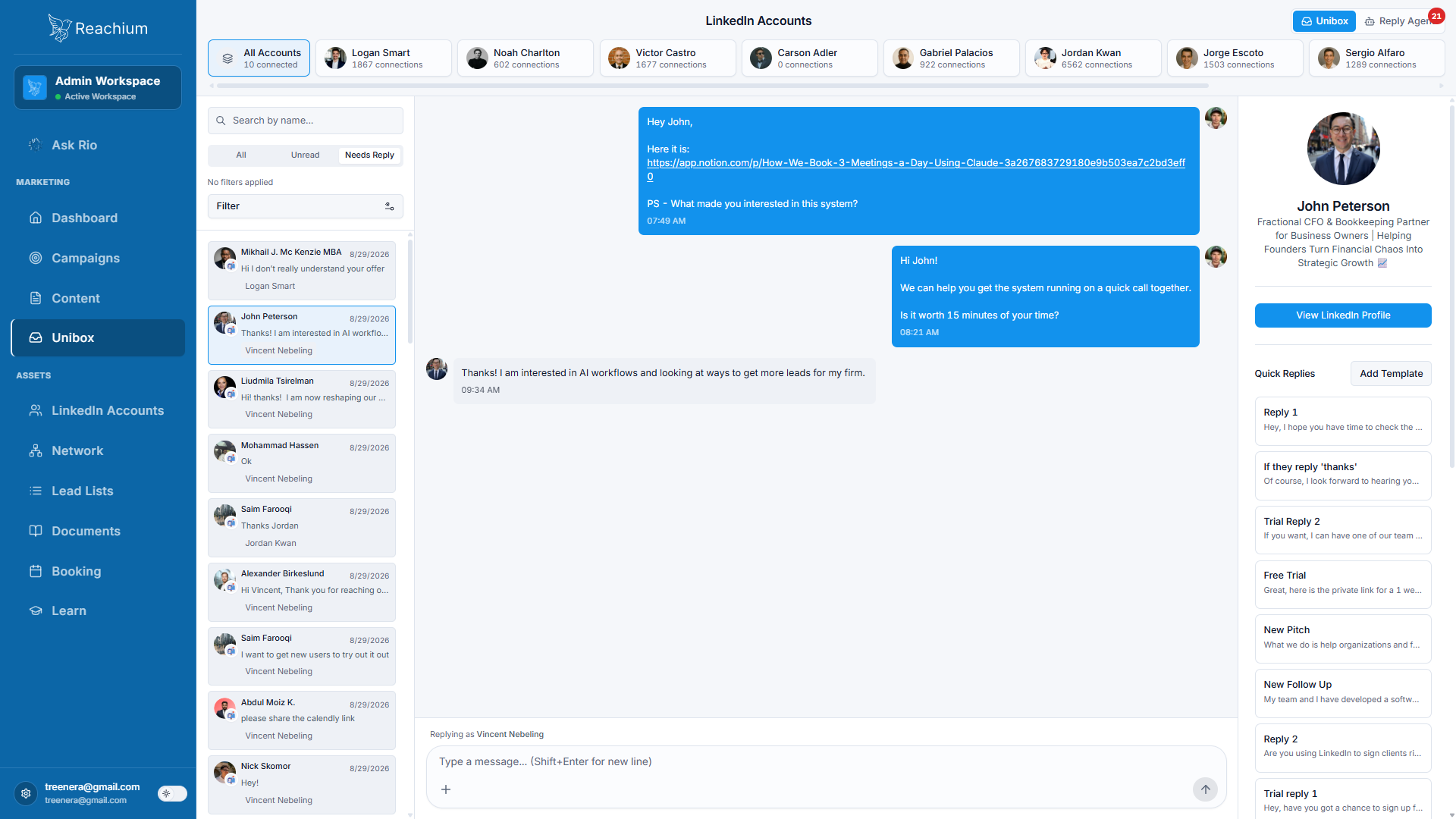
Every template above works as a campaign step in Reachium. Claude fills the merge tags per lead, personalizes the [brackets] from each prospect's real profile and posts, paces the sends under LinkedIn's limits, and flags the replies. You approve the drafts and take the conversations.
What actually matters
The templates work because of the principles under them: relevance beats volume, specificity builds trust, value comes before the ask, short respects their time, and making no easy makes yes easy. Change every word if you like. Keep the principles.
Want the system behind the messages?
Templates get replies. Pipeline comes from the full system: the right list, the content that warms it, the follow-up that never slips, and the inbox that answers same-day.
Send five of these this week and you'll book more calls than a month of posting and hoping.
- Jordan Kwan, founder of Reachium